INTERNATIONAL COOPERATION IN VOCATIONAL EDUCATION –
Developing Practical Solutions Across Borders
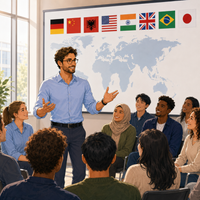
Vocational education plays an important role in preparing young people for working life, supporting companies in developing skilled employees and strengthening economic and social development.
Although vocational education systems differ from country to country, many challenges are similar:
- How can young people be prepared for a changing world of work?
- How can trainers and workplace instructors be supported in their role?
- How can practical learning, professional knowledge and future skills be connected?
- How can companies, educational institutions and public organisations work together more effectively?
I am interested in exchanging perspectives, learning from different systems and developing practical solutions together with international partners.
What I Can Contribute
My work focuses on apprentices, young professionals, trainers, workplace instructors and organisations responsible for vocational education.
Possible areas of cooperation include:
- workshops for apprentices and young professionals
- train-the-trainer programmes
- qualification programmes for workplace instructors
- keynotes and professional presentations
- professional exchange and study visits
- pilot projects in vocational education
- development of training concepts and learning formats
- workshops on communication, learning, future skills, resilience and self-management
- support for companies and institutions developing workplace-based training
The content, duration and format can be adapted to the objectives, educational system and local context of the partner organisation.
Experience in Vocational Education
Since 2004, I have worked with apprentices, young professionals, trainers, workplace instructors, companies, chambers and educational institutions.
My experience includes:
- several hundred workshops for apprentices and young professionals
- several thousand young participants
- more than 2,000 participants prepared for the German trainer aptitude examination
- many years of experience as an examiner for trainer qualifications at German chambers
- workshops and qualification programmes for trainers and workplace instructors
- projects across a wide range of industries and organisations
This combination gives me a practical understanding of vocational education from different perspectives.
I work directly with young people while also supporting the people and organisations responsible for their learning and development.
Experience in China
In 2019, I delivered a train-the-trainer programme in China. The project was based on principles of the German vocational education system and focused on the practical qualification of trainers.
Topics included:
- planning and organising vocational training
- designing effective learning processes
- using practical training methods
- guiding and supporting apprentices
- communicating with young people
- reflecting on the role and responsibilities of trainers
This experience strengthened my interest in international vocational education and demonstrated the importance of adapting concepts to the educational, cultural and organisational context of the partner country.
The aim should not be to transfer one vocational education system unchanged.
The aim should be to identify useful principles, learn from different approaches and develop solutions that fit the local situation.
A Growing Connection with Albania
Albania has become an increasingly important part of my personal life and perspective.
As my connection with the country grows, I am particularly interested in exchanging ideas with Albanian companies, chambers, associations, educational institutions, universities, vocational schools and public organisations.
Albania is developing rapidly and faces important questions concerning vocational education, the transition of young people into working life, skilled labour and cooperation between education and business.
My intention is not to present the German vocational education system as a model that can simply be copied.
Instead, I would like to explore which experiences, methods and practical approaches could be useful in the Albanian context – and what Germany and other countries can learn from Albanian perspectives and developments.
Possible starting points could include:
- qualification of trainers and workplace instructors
- support for companies involved in vocational education
- workshops for students, apprentices and young professionals
- career orientation and the transition into working life
- future skills and digital competence
- communication and cooperation between generations
- quality development in workplace learning
- exchange between German and Albanian organisations
- joint pilot projects and professional dialogue
Possible Cooperation Partners
I am open to cooperation with:
- companies and employer organisations
- chambers and professional associations
- vocational schools and educational institutions
- universities and training academies
- public authorities and government institutions
- international organisations and development projects
- foundations and non-profit organisations
- German organisations with activities in Albania or other countries
Cooperation can begin with a conversation, a keynote, a workshop or a small pilot project.
It does not always require a large programme from the beginning.
Possible Formats
- single workshops
- multi-day training programmes
- modular qualification programmes
- train-the-trainer courses
- keynotes and conference contributions
- online workshops and professional exchange
- face-to-face programmes in the partner country
- study visits and exchange programmes
- joint development of concepts and learning materials
- pilot projects with companies or educational institutions
The language, content, duration and delivery format can be adapted to the participants and the objectives of the project.
My Approach
International cooperation requires openness, curiosity and respect for different experiences and systems.
My approach is therefore based on:
- listening before proposing solutions
- understanding the local context
- combining practical experience with current research
- developing concepts together with local partners
- testing ideas in realistic settings
- reflecting on results and adapting the approach
- focusing on solutions that can be applied in everyday practice
Successful cooperation does not mean transferring finished concepts from one country to another. It means developing something together that creates genuine value for the people and organisations involved.
Let’s Explore What Could Be Possible
Are you interested in vocational education, trainer development, workshops for young people or international cooperation?
I would be pleased to learn more about your organisation, your objectives and the challenges you are currently addressing.
A first conversation can help us explore whether there are useful opportunities for cooperation.
Email: info@holger-weber.de